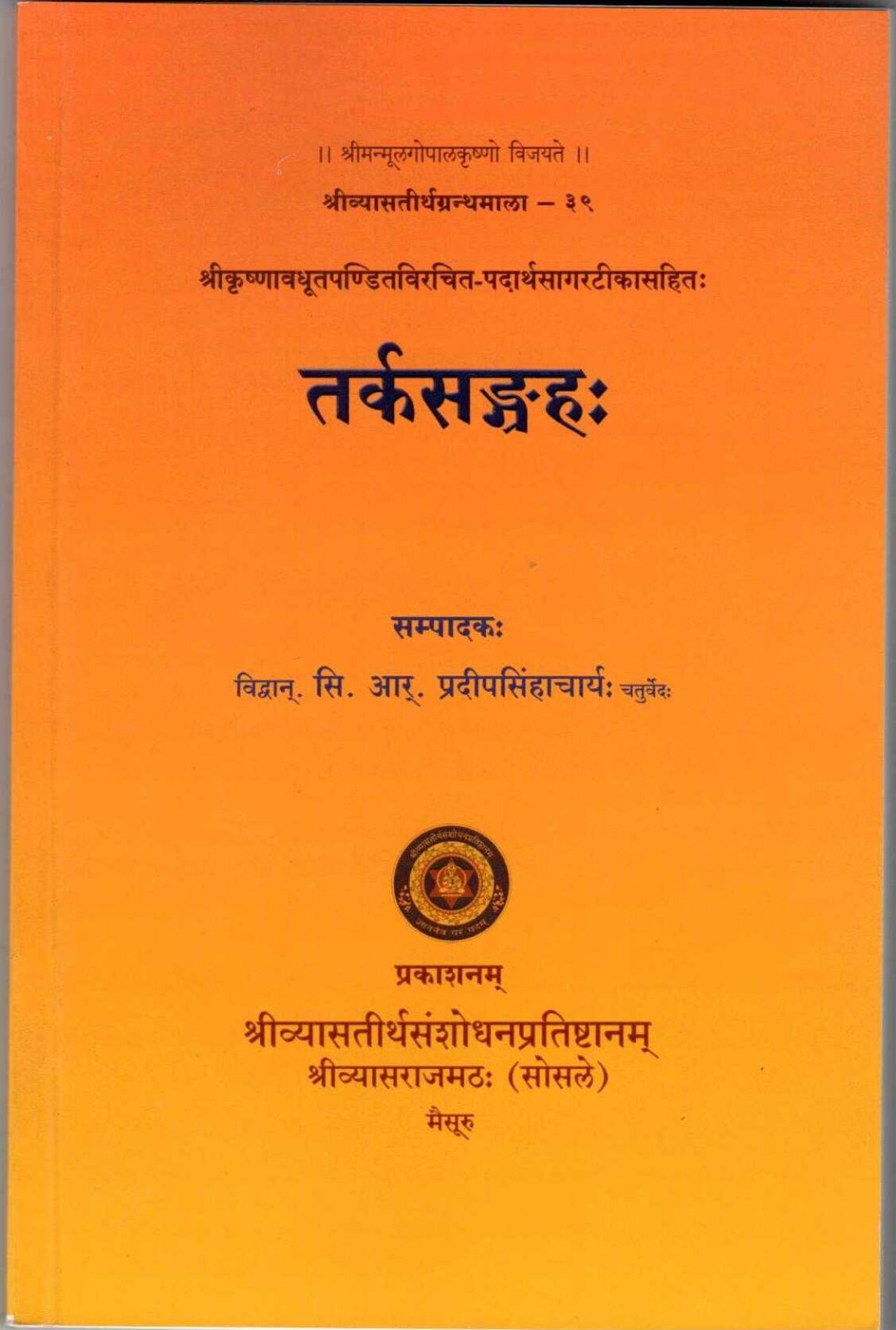
ग्रन्थपरिचयः
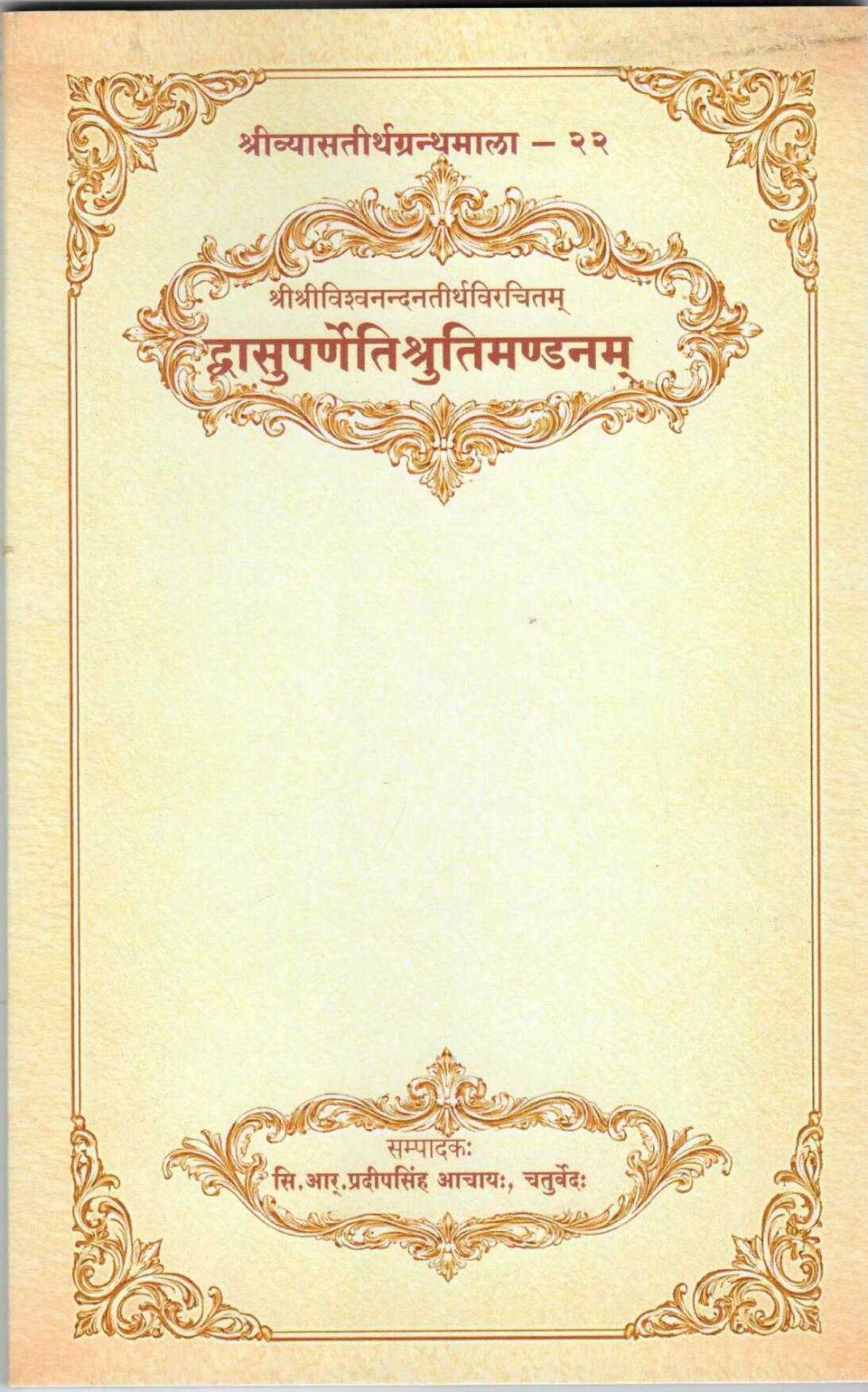
Dvāsuparṇeti Śrutimaṇḍanam
by Śrī Viśvanandana Tīrtha Śrīpādaru · 2026 · संस्कृतम्
 संस्कृतम्
Featured
संस्कृतम्
Featured
Dvāsuparṇeti Śrutimaṇḍanam
by Śrī Viśvanandana Tīrtha Śrīpādaru
Inclusive of all taxes
About this book
Dvāsuparṇeti Śrutimaṇḍanam is a valuable and timely contribution to the study of Vedānta and Vedic exegesis. The work addresses the interpretation of the celebrated Atharva Vedic passage beginning with "Dvā suparṇā sayujā sakhāyā...", which has long occupied a significant place in discussions on the relationship between the individual soul (jīva) and the Supreme Brahman.
The learned scholar Bālabrahmānanda Sūri had authored a treatise maintaining that this śruti does not establish the distinction between the individual soul and Brahman. In the present work, His Holiness Śrī Śrī Viśvanandana Tīrtha Śrīpādaru has authoritatively demonstrated that the same Vedic passage unequivocally teaches the eternal distinction between the jīva and the Supreme Lord. Drawing upon the corresponding verses of the Eleventh Skandha of the Śrīmad Bhāgavata Mahāpurāṇa, which illuminate the true purport of this Vedic mantra, His Holiness establishes the Dvaita interpretation with remarkable clarity and scriptural precision.
Indeed, the expressions found in the śruti—"Dvā suparṇā," "tayor anyaḥ," and "anaśnann anyo abhicākaśīti"—plainly indicate the existence of two distinct entities. When both the individual words and the sentence as a whole explicitly affirm difference, it is difficult to sustain the view that the śruti does not teach the distinction between the individual soul and the Supreme Being. The interpretation presented in this work, supported by the illuminating exposition of the Śrīmad Bhāgavata, is therefore both compelling and fully consonant with the intent of the Vedas.
By composing Dvāsuparṇeti Śrutimaṇḍanam, His Holiness Śrī Viśvanandana Tīrtha Śrīpādaru has rendered an invaluable service to Bhagavān Vedavyāsa, the compiler of the Vedas and the divine author of the Śrīmad Bhāgavata, while simultaneously strengthening the authentic tradition of Dvaita Vedānta. We offer our heartfelt appreciation and respectful congratulations to His Holiness for this remarkable scholarly contribution.
Śrī Pradīpa Siṃhācārya is a Sanskrit scholar and researcher dedicated to the study, preservation, and propagation of India's classical philosophical traditions, with special emphasis on Dvaita Vedānta. Having received rigorous traditional training in Sanskrit and Śāstric studies, he has been actively engaged in research on Vedic literature, Vedānta, Nyāya, Mīmāṃsā, and the rich manuscript heritage of the Dvaita tradition.
His academic interests include textual criticism, manuscriptology, critical editing of unpublished Sanskrit works, and the systematic interpretation of scriptural literature based on traditional commentarial methods. Through his research, he strives to preserve authentic textual traditions while making them accessible to scholars, researchers, and students.
As the editor of Dvāsuparṇeti Śrutimaṇḍanam, Śrī Pradīpa Siṃhācārya has carefully examined the text, verified scriptural references, and prepared the work for publication with scholarly precision and fidelity to the original. His editorial efforts have ensured that the profound philosophical exposition of His Holiness Śrī Śrī Viśvanandana Tīrtha Śrīpādaru is presented in an accurate, reliable, and reader-friendly form.
Through his continuing research and editorial work, Śrī Pradīpa Siṃhācārya is making a meaningful contribution to Sanskrit scholarship and to the preservation and dissemination of the enduring intellectual heritage of Dvaita Vedānta.
Table of Contents
No table of contents has been added for this language yet.
4.5
5000 reviews
Customer reviews
Verified buyers can rate and comment after a successful purchase. Guests can read public reviews below.
Sign in to write a review after purchasing this book.
Sign in to review →Recent reviews
No customer reviews yet. Be the first after purchasing this book.
Śrī Viśvanandana Tīrtha Śrīpādaru
संस्कृतम्
Listed author for this volume. For more works, browse the publications catalogue or contact the institution.
View publications →Insights
Page visits and catalogue signals for this publication.
Total visits
37
All-time page views
Last 7 days
9
Unique daily visits
Last 30 days
37
Unique daily visits
Unique visitors
36
Distinct browsers
Copies sold
2
Paid orders
Rating
4.5★
5000 reviews
Availability
In stock
Current status
Visits are counted once per visitor per day. Totals grow as readers open this page.